
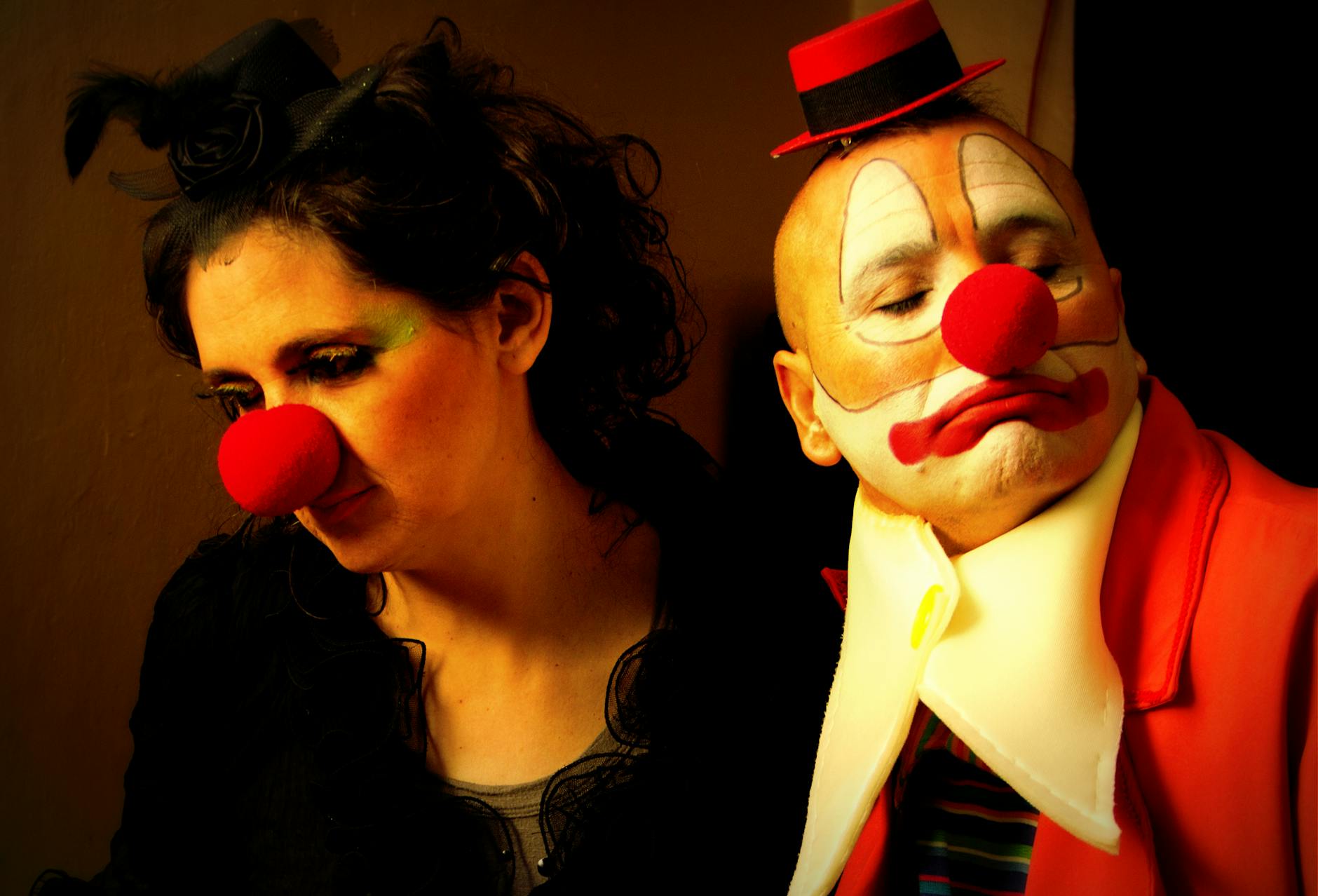
Audiences love and enjoy the silliness and absurdity of the clown character. “Clown logic” as a clown tutor said, is the character doing the same thing repeatedly to the point of absurdity”. The clown’s failures by their very nature are a mirror image of our comical attempts at life. Clowning can help us face difficult truths, free us from unnecessary suffering, and allow us to embrace creativity and playfulness.
The dark side of the fool
The clown or fool’s optimism, playfulness, and innocence have a dark side. Innocence and simplicity are delightful in children. In adults, being ‘simple’ can lead to disastrous consequences. The simple fool is open to any passing impulse, thought, or fad. Simple fools have an oversimplified view of the world. They fail to understand the cause and effect sequences that affect every area of their life. Clowns are like this. A pair of clowns are walking past a hospital and hear a call for a surgeon over the PA system. One clown looks to the other and says: “I could do that.” They decide to put on a white coat and a mask. The clowns then play hospital. The simple fool lacks discernment. They have the ability to sift right from wrong. They can also judge shades of grey when making good decisions. The clown or fool embodies optimism, playfulness, and innocence, but these traits come with a darker side. While innocence and simplicity can be charming in children, in adults, being overly ‘simple’ can lead to disastrous consequences. Simple fools are easily influenced by any passing impulse, thought, or fad, resulting in an oversimplified world view. They often fail to grasp the cause-and-effect relationships that impact various aspects of their lives.
Consider a pair of clowns walking past a hospital. They hear a call for a surgeon over the PA system. One clown turns to the other and says, “I could do that! Let’s put on a white coat and mask and pretend to be doctors.” This shows how the simple fool lacks discernment. They lack the ability to evaluate and judge right from wrong. They also fail to recognize shades of gray when making decisions.
The tragic side of failure
To attempt or try anything new or different is take the risk of making mistakes. Some mistakes are much harder to recover and have longer-term consequences. Playfulness, spontaneity, and a live-for-the-moment philosophy can lead to impulsive decision-making without the thought of long-term consequences. Comedy gives way to tragedy when someone refuses to learn from their mistakes. Tragedy is watching some repeat the same mistakes while expecting a different outcome.
Reclaiming our foolishness.
We can ‘play the Fool’ or be ‘played by the Fool’. Linguistic distinctions are important. A foolish person lacks judgment. They make poor decisions. Such people often repeat the same mistakes without changing or reflecting upon their behaviour. The disowned fool manifests in repetitive and tragic behaviour. You’ve observed someone at work or in another setting. They seem to be incapable of learning. They fumble their way through making one mistake after another. As an onlooker, their attempts resemble comedy of tragic dimensions. Some psychologists classify this behaviour as a form of narcissism. A narcissist has an inflated view of themselves, verging on grandiosity. A person ‘played by the fool’ resists any attempts to learn from others and refuses to accept help or assistance.
The wise Fool as an ally in the game of life
Acknowledging our “self-deception” is essential for becoming a wise fool. Some honest and painful self-reflection is necessary. It helps in understanding the behaviour patterns that keep us stuck in the tragicomedy of life.

 Foolish Times
Great article! I really appreciate the clear and detailed insights you’ve provided on this topic. It’s always refreshing to read content that breaks things down so well, making it easy for readers to grasp even complex ideas. I also found the practical tips you’ve shared to be very helpful. Looking forward to more informative posts like this! Keep up the good work!
LikeLike