Utilize These Strategies To Banish Stress

Guest author, Chloe Pearson.

In today’s dynamic and fast-paced world, stress is an omnipresent aspect of our daily lives. But there is hope amidst the chaos: this guide, courtesy of Foolish Times, stands as your lighthouse in turbulent waters, illuminating the path with practical and effective strategies to pinpoint and master the stressors you encounter. With each page, you are invited to embark on an enlightening journey, one that leads towards achieving a harmonious balance and a state of tranquil calm. Here, you’ll not only learn to cope with stress but also transform it into a stepping stone for personal growth and inner peace.

Reflective Insights

Embracing self-reflection is key in managing stress. Regularly set aside time to contemplate moments of tension and overwhelm. This introspection aids in identifying stress triggers and patterns in your life, paving the way for a deeper understanding of your personal stress responses and how to mitigate them.

Embracing Mindfulness

Mindfulness is a powerful ally in combating stress. Incorporating practices like deep breathing and meditation into your daily life cultivates a sense of inner peace. Regular mindfulness exercises train your mind to remain calm and centered even amidst life’s chaos, providing a solid foundation for managing stress effectively.

Career Reevaluation

Navigating a stressful career can have profound effects on your overall well-being. If you’re frequently grappling with work-induced stress, it might be time to ponder a career shift. In today’s world, rich with modern advancements, a plethora of online education and training avenues are at your fingertips. These resources can guide you to explore new professional avenues more in tune with your aspirations and stress management capabilities, such as a Doctor of Education degree that allows you to help others. Learn how to simplify your process with this array of digital tools, making the journey towards a career transition less daunting and more aligned with your personal growth and professional satisfaction.

Support Networks

Never underestimate the power of a strong support network. Sharing your concerns and stressors with trusted individuals can be incredibly therapeutic. Engaging in open, honest dialogues with friends, family, or professionals offers fresh perspectives and coping strategies, enhancing your ability to manage stress more effectively.

Setting Boundaries

Establishing and maintaining clear boundaries is essential in stress management. Identifying areas in your personal and professional life that require firmer boundaries can significantly reduce stress levels. A healthy balance between work and personal life, along with respecting your own personal space, is crucial for mental well-being.

Physical Wellness

Participating in physical activities is a highly effective way to combat stress. Whether it’s a brisk walk, a calming yoga session, or an energetic workout at the gym, these activities play a crucial role in easing physical strain and fostering mental tranquility. Consistent physical exercise is a vital element of a well-rounded stress management strategy, providing not only instant stress relief but also delivering enduring advantages for your overall health. Moreover, this regular engagement in physical activities enhances your body’s ability to handle stress more efficiently, leading to a healthier, more balanced lifestyle.Adaptability and Acceptance

Mastering the art of adaptation and acceptance is crucial in the effective management of stress. It’s important to actively reduce or completely avoid situations that consistently trigger stress. In scenarios where control eludes you, embracing acceptance becomes a key strategy. This mindset not only assists in preserving mental equilibrium but also fosters resilience, enabling you to navigate through challenging circumstances with greater ease. Furthermore, this approach cultivates a mindset that transforms obstacles into opportunities for personal growth and emotional strength.

The journey to mastering life’s stressors is not a quick fix but a continuous process of self-discovery and adjustment. By embracing strategies such as self-reflection, mindfulness, career reevaluation, seeking support, setting boundaries, engaging in physical activities, and practicing adaptability and acceptance, you equip yourself with the tools necessary for navigating through stress. Remember, your ability to recognize and tackle stress is a testament to your strength and resilience, leading you towards a more fulfilling and balanced life.

Foolish Times offers blog posts on a variety of topics for the modern reader. Have a look around today!


The quest for intelligent life: aliens, UFOs, and other strange phenomena

Your choice is simple. Join us and live in peace or pursue your present course and face obliteration.

Photo by Marek Piwnicki on Pexels.com

‘Watch the skies,’ the wise old scientist said in a scene from a 1950s science-fiction film. And I did! As a “cradle Catholic,” my old religious beliefs were overshadowed by a new religion: Unidentified Flying Objects. When I couldn’t make sense of institutional religion, I looked to the heavens in search of extra-terrestrial beings. There was a rise of interest in Aliens, Unidentified Flying Objects, Bigfoot, and paranormal phenomena in the mid-1970s. My sister handed me a copy of Erik Von Daniken’s book “Chariots of the Gods.” The author’s belief that alien creatures had visited Earth and contributed to humanity’s progress was both alluring and (pseudo) scientific.

I wanted to believe that more intelligent life forms existed elsewhere in the far-flung reaches of the universe. Perhaps they benefited from evolutionary processes. To those of us, on the lower rungs of the evolutionary ladder, alien beings with sophisticated technologies would appear to possess `supernatural’ powers beyond our limited understanding. We, Earthlings, would one day ride the crest of the evolutionary wave and eventually learn to coexist peacefully among ourselves and our alien friends. Throughout my childhood, the threat of nuclear war between the Soviet Union and the West was always in the background. There was always the hope of alien intervention. Perhaps they can assist us in fixing some of our planet’s most pressing concerns. A recurring, hopeful theme in many science fiction films.

Science fiction films and post-war anxieties in a nuclear age.

Gort Klaatu Barada Nikto

At the dawn of the nuclear age, one film captured the postwar anxieties of the early 1950s. The plot of ‘The Day the Earth Stood Still’ focused on the arrival of an alien named Klaatu and his robot protector, Gort. Gort descends the flying saucer’s stairway to defend Klaatu after a trigger-happy soldier shoots him in the hand in the opening scene. An intriguing storyline twist is revealed in the closing scene. Klaatu gives a sober warning to the audience of civilians, scientists, clergy, and military. Other races in the cosmos, he claims, are concerned about the human race’s tendency to violence. Klaatu reveals that robots such as Gort patrol the Galaxy, ready to interfere when necessary at the first signs of violence and aggression. To maintain the peace, Klaatu and other aliens have voluntarily become submissive to robots like Gort. In his final words, Klaatu says:

Your choice is simple. Join us and live in peace or pursue your present course and face obliteration.

An unsettling message from one of my favorite sci-fi films. There is an underlying realism. Can humanity ever be trusted to manage our own affairs? Humans are like badly behaved children: we cannot be trusted to govern ourselves and need some `adult supervision’ from a more highly evolved race. During the early eighties, at the height of the peace movement, I remember having a conversation with an older male friend after a Labor party branch meeting. (a Left of centre political party in Australia) The possibility of a nuclear war between the Soviet Union and the United States of America was a topical issue. I clearly remember fretting about the outcome of the 1980 U.S. presidential election. In American terms, I was a liberal and a supporter of the incumbent President, Jimmy Carter. I was disappointed that the Republican candidate, Ronald Reagan won a landslide victory against Carter. As a classic ‘bed wettin liberal’ type, I was almost convinced that Ronald Reagan was trigger happy, like the impulsive soldier that fired at Klaatu. My friend George reassured me that `wiser-heads’ would prevail and the threat of a nuclear Armageddon was over-stated. In 1987, President Reagan negotiated an arms control treaty with the Soviet Leader, Mikhail Gorbachev. What a relief! No more sleepless nights and nightmares of Armageddon. And no need for more `Hollywood style’ alien warnings.

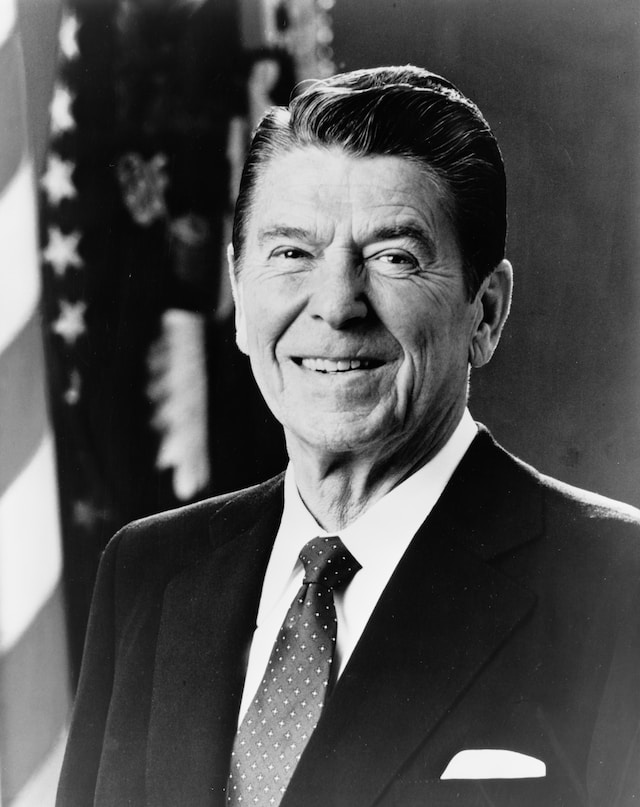
Mr Ronald Reagan, 40th President of the United States of America.

What if the Aliens travelled millions of miles across the galaxy to give us a warning – only to discover we didn’t need their help! Sometimes, we humans get it right! Imagine the Alien ambassador meeting President Reagan at the White House.

Well…gee…it’s quite an honour to finally meet the Ambassador of the National Galactic Council’, President Reagan says in a folksy manner. 

Greetings Earth people. I am Zark. We come in peace. We would like to extend an offer of help. We are concerned about the warlike tendencies of the human race. If you would let us…

President Reagan looks at Ambassador Zark and explains:

`Gee…am…uh… Ambassador Zark…we’re doing fine. I just signed a peace treaty with our longtime enemy…the Soviet Union… If we need your help…we’ll call you.

The belief in aliens or some higher intelligence that can save humanity from a terrible tragedy persists. Even now, the appeal of a ‘Christ’ figure like Klaatu is great. On an instinctual level, perhaps most of us still want for a figure larger than ourselves to intervene and restore peace and harmony to our troubled earth. More like a blunt-spoken John the Baptist, who will push us to abandon our self-centeredness and violence in favour of embracing a larger vision of the possibility of a world at peace. The idea of wiser, more intelligent aliens clashes with another possibility addressed in literature and film. ET is not the only type of alien visitor. Some of them are outright rude, unpleasant and nasty!

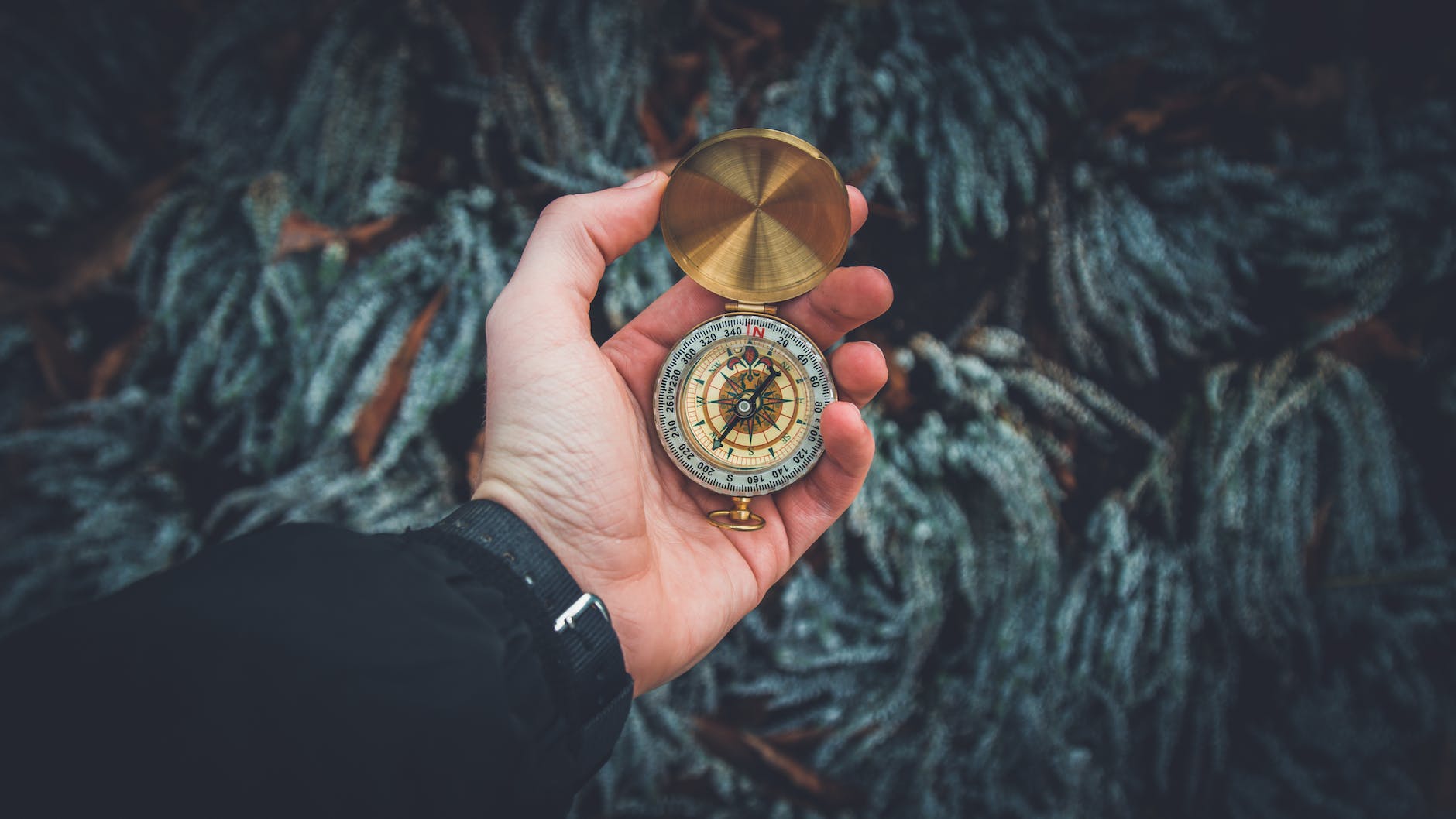
Step into your Adventure

We need a new kind of explorer, a new kind of pathfinder, human beings who, now that the physical world is spread out before us like an open book with the latest geographical mystery solved and the highest mountain climbed, are ready to turn and explore in a new dimension.

Laurens Van Der Post.

Photo by Alex Azabache on Pexels.com

Travel and the external quest for Adventure

The word `adventure’ conjures up images of intrepid explorers in far-off lands. Traditionally, adventure was the privilege of a select few. Only the very wealthy could fund overseas adventures. There were also incredible risks involved. While getting `Delhi-belly’ during a backpacking trip in North India was a nuisance, some traditional adventures cost explorers their health and their lives. Cheap airfares, the internet and social media have opened up the world in ways that people could not have previously imagined.

In an increasingly interconnected world, exciting new places are being discovered at a furious pace. It’s like time and space have become compressed. Recently, I participated in a webinar with people from around the world including a Hindi- speaking woman from Colorado and an Egyptian man who lives in Cairo. The exhilarating rate of discovery comes with the loss of the old definition of adventure. There are fewer, untouched areas of the planet that have been left unexplored and untouched by tourists.

The age of mass travel opens up the world.

As airline travel began to emerge in the fifties and sixties, the possibility of mass travel around the world became a reality. In the 1960’s, Sean Connery as fictional spy, James Bond, catalysed the imagination of the public as he embarked on exhilarating overseas adventures. James Bond movies have long been able to draw on audiences’ desire for escapism, exotic locations, and danger. Airline travel was still very expensive and a novelty for most people. If airline travel was too expensive, movie-goers could relax and enter the imaginary world of agent 007 as he jetted around the world on assignment.

James Bond (and other fictional heroes) encouraged us to discover many of these locations for ourselves. On my first backpacking trip to Udaipur, (South India) in 1999, I stayed in a hostel. I was exploring the possibility of doing community development in North India. From the balcony, I could see the famed Lake Taj Palace.  The Taj Palace was one of the locations for filming Octopussy. Every evening, the hotel owners placed a well-worn VHS copy of the movie, Octopussy in the video machine to the delight of tourists.

The threshold for adventure increases.

In an age of mass travel, audiences are more sophisticated and have a higher threshold for adventure. Our thirst and craving for new and original or exotic experiences is difficult to satisfy. Bond movies adapted to satisfy the growing expectations of moviegoers for exotic locations. The most recent Bond movie, `No Time to Die’, was set in multiple countries around the world. Finding exotic locations is a real challenge. There are fewer unknown areas, groups, or localities that have not been exposed to the influences of Western culture or tourists.

During the 1980s, I went to see the movie `The Last Emperor’, with a friend. The movie is based on the story of the last monarch of the Qing dynasty in China during the Japanese occupation in World War 2. I looked around to see my friend, Emily sobbing quietly. After the movie was over, I asked Emily why she was crying. A normally chatty and vivacious person, Emily paused to gather her thoughts. She looked at me and said: `I was crying over the end of an era’.  Emily explained that she felt the loss of old-age traditions and exotic locations. A musician once told me: `If you want to get a taste or an experience of traditional music cultures or untouched cultures…you might have better luck in the diaspora s people cling or value their traditional culture more when in a foreign land or new country.

The end of adventure or the beginning of something new?

The absence of undiscovered or novel locations is not the only challenge to traditional notions of adventure. There is also the risk of over-exposure and familiarity. Our innate restlessness, yearning for adventure, and thirst for new experiences can never be fulfilled. Traveling will never totally satisfy a deep desire or longing in our hearts. As a wise man once said, we have “eternity in our hearts,” a restlessness and desire within to be a part of a larger cause or a story bigger than ourselves. The slow demise of traditional notions of adventure presents an opportunity. A challenge to reimagine the concept of adventure.

Life is an adventure:  finding adventure in everyday life through self-discovery.

Photo by Andrea Piacquadio on Pexels.com

A new breed of explorer has emerged: one who looks within and is interested in self-discovery and learning. Regardless of where they live, the true explorer seeks out new experiences and challenges. There are internal adventures that ask us to go beyond our known or fixed concepts, into dark and unpleasant areas, and confront ourselves before we can break through. On his/her journey, the explorer encounters all of his anxieties, causes that have become strongholds or mental prisons. He must overcome his fear of appearing ‘foolish’ before he can become competent and have a genuine chance of changing jobs or improving his relationships. You can make a simple day adventurous by stepping out of your ordinary routine, trying different things and experiencing life in new ways.

In my next blog post, I will elaborate on why re-imaging Adventure will become more important in the next decade.

Adventure: Looking for a larger story

Photo by Rijan Hamidovic on Pexels.com

Australia’s iconic Sydney Opera House

One of my earliest childhood recollections is hearing some grownups discussing travel during a family barbecue. One of my aunts had visited Sydney and returned with several mementoes, including photo slides, trinkets and a miniature Sydney Opera house pencil sharpener. I was the awestruck recipient of the Sydney Opera House pencil sharpener. Like a precious jewel or ancient artifact, it was gold- coloured and glistened as I held it up to the sunlight.

An elderly man set down his beer and added, “You see your own country first before travelling overseas,” in a thick, nasal Australian accent. Everyone agreed by nodding. His remarks served as the “last rites” on the subject of international travel. There were entire universes in my head just begging to be explored. His universe was limited to going to the pub. Nobody else at the family gathering dared to depart from the safe and acceptable topics of conversation, which included weather, politics, news, sport and family rumours.

In retrospect, it was simple for me to pass judgement. This generation lived through the Great Depression. Not long after, the Second World War broke out. They had to deal with shortages and lost friends and relatives to war. These were sensible individuals who had cultivated a sense of thrift and valued financial stability. I was uncomfortable with their lack of curiosity and desire to consider alternate ways of understanding the world. I did appreciate hearing tales of the war or wartime escapades; some were humorous, given with a very distinctively Australian, irreverent sense of humour; other tales, however, were tragic, sad or difficult to comprehend. There is something very human within us that yearns to discover or live for a bigger narrative, to be bold and adventurous, or to be willing to give our very self for a greater good.

The beginning of a larger story: the role of organised religion.

Photo by Paolo on Pexels.com

Alternate narratives can be found in the most unexpected locations. I was raised in a Catholic household. Despite the church’s greatest efforts to make faith in God seem uninteresting, there were always some subversive undercurrents that thrived, inspired, and provoked participants within the institution.

The elderly nun who taught us religion one day shared a fascinating tale about Fr. Maximilian Kolbe, a Franciscan priest known as the “saint of Auschwitz death camp,” with us. Franciscan friar Maximilian Kolbe resided in a monastery in Poland. Fr. Kolbe organised a temporary hospital and assisted to offer shelter for 2000 Jewish refugees when the German army invaded Poland in 1939. In the end, the Gestapo detained him for concealing refugees and put him in the Auschwitz concentration camp.

The Auschwitz Deputy Commander issued an order in 1941 to execute ten prisoners in retribution for an attempted escape. One of the men begged for forgiveness since he was a father. The man’s suffering touched Fr Maximilian Kolbe, who offered to step in. The Deputy Commander granted his request, and Fr Maximilian and a few other survivors were ultimately put to death. Some Saints, such as Francis of Assisi and Teresa of Avila, bucked convention and discovered independence inside the established church. They were “Fools for Christ,” living selflessly and bravely for others. These tales had a lasting impact on my life or are still resonating now.

There circumstances where men and women freely and voluntarily sacrifice their life for others in the world today. It takes self-identity to sacrifice out of freedom rather than following some externally imposed view or belief for the sacrifice to have any real meaning. I could not really grasp how to make their example ‘my own’ unless I applied to the priesthood or a religious order. The difference between my everyday existence and the religious ideal was enormous. How was I ever going to close that gap? Feeling disappointed, I gradually turned to another source of “ancient wisdom” – the occult.

My personal quest for adventure

Photo by Valentin Antonucci on Pexels.com

When I was in my early teenage years, I started looking for adventure because I was feeling restless and discontented. I was always curious and enjoyed learning about new places, which motivated me to venture outside the realm of what I knew.

Adventure as the discovery of the external world.

In my early years, I thought of adventure as exploring the outside world. In
a  scene from the `Temple of Doom’, Indiana Jones’s sidekick, Short Round, asks him a question about the Shankara stones. Indiana Jones provides a concise explanation of his motivation: “Fortune and glory, kid, fortune and glory.” My fortune and glory were a career in politics. I gravitated to journalism. I thought this would be a practical path to a political career.

While journeying through the external world, I could no longer ignore my interior world. Like a lost traveller, I was overcome by what I
saw. I cautiously moved from the outward to the inner world to navigate through my darkness and confusion in the quest to the `treasure’. The treasure as represented by discovering the purpose of my life.   

The quest for adventure: exploring my internal world.

The unconscious is the land of the internal world. I was a reluctant
explorer, but after a period of travelling in India for 3 months during the
early nineties, I returned home to Australia feeling spiritually distraught,
confused and more fearful than ever before. There was something about this trip that touched a raw nerve inside of me. The pain and confusion of self-sabotage behaviour pushed me to go deeper into my inner world and find out what was going on beneath the surface. My India adventure had peeled back the layers to uncover my inner wounds–but it wasn’t all bad news! A whole new world revealed itself to me in greater depth: one that is mysterious and fascinating. A world expressed through the language of dreams, synchronicity and self- awareness.

Finding the hidden treasure or the `gold’ refined in the fires of
adversity.

I looked inward and found the treasure I had been searching for. In the
fires of adversity, I discovered the gold refined through my struggles. The
precious gold that came from the important life lessons and wisdom achieved along the way developed through facing adversity and uncertainty. Adventure is moving out of my comfort zone beyond what I can control and predict. It is being open to new experiences and the willingness to risk failure. Learning to embrace failure without harsh self-judgment was going to be one of my biggest personal challenges.

The next phase of adventure: the entrepreneur’s journey.

After a particularly difficult time in mainstream employment, I was
increasingly drawn to the idea of self-employment. I decided to commit to the entrepreneur’s journey. Like the promise of buried treasure, the dream began to call on me until I could no longer ignore the call. It could be starting a business, following your dreams, starting a family, quitting a job or following your dreams. There are adventures waiting to be discovered in the day- to- day routines of life.


The Time My Dog Almost Caused a Divorce

We had each lost our sense of self. We each need that autonomy to grow as individuals.

Guest Author Chloe Pearson

I didn’t see it then, but the day I struggled to get off the couch because my dog was sitting on me was the start of my COVID woes, as we call them now. It’s not like she was really holding me down. She’s all of ten pounds. It was that I had let myself go. My back hurts. I was 15 pounds heavier than I’d ever been. My diet was a wreck. I was depressed.

Anyway, I realize now that that was when the irritability began. It was at that moment that I started snapping at my husband for everything, and when we stopped communicating. I wanted to share my story with the Foolish Times blog because I think that we all need to learn to recognize those small moments that change everything.

Let me back up. Before COVID, my husband and I spent every weekend doing something active with our kids. Once they went to bed, we would snuggle, watch movies, and even play the occasional game of Scrabble. Then, out of the blue, everybody was home. All the time. And nobody ever left. So, naturally, we got lazy. I got lazy. While I know that there’s nothing wrong with having the occasional “do nothing” day, I quit running, quit swimming, I quit watching what I ate, and started shoving everything in my face all day long – that was a mistake.

On this day, the kids were playing in the backyard, and I heard them start yelling at each other (red flag number one). My husband and I were on the couch, and I was already annoyed because he was chewing really loud. So I went to get up, and it wasn’t easy. I got mad that he did not immediately jump up to go check on the kids, and I snapped at him by saying, “Do I have to do everything in this house!?” It was the first time I yelled at him, but it wasn’t the last.

Fast-forward. It’s late 2020, he and I had been arguing every day for the last six months, so I called my attorney. She could not see me for nearly four weeks because she was busy. Apparently, we were not the only ones having marital problems. I had also gained more weight, couldn’t get a haircut, and my liquor cabinet was starting to run dry. Looking back, I’m glad that she could not make the appointment because I had another moment that changed my outlook. My youngest asked me why I hated daddy and why I always looked so tired, even though I was sleeping well past breakfast.

I had to make a change, and I started by separating my and my husband’s workspaces so that I could at least have some time during the day when we were not staring at each other. I turned our spare bedroom into my office, and I made sure it was organized and that I put my desk next to the window. That helped. Being on the other side of the house all day felt a little more normal than sharing the sitting room during business hours.

I even started thinking again about starting my own business and what that might look like. I started by brainstorming some ideas in the quiet of my new home office space. Then, I ran a few of them by my husband before landing on one that I wanted to pursue.

Next, I started working out again. I bought leggings – not the cheap “buttery soft” leggings half the women in my neighborhood sell; I needed something more durable that was also comfortable. I also got some new sports bras and a pair of Saucony running shoes (these, for anyone interested).

Our home is in an area with a good walk score, so I started slowly by walking past the closed shops and restaurants. As I gained back my strength and stamina, my walks turned into jogs and then runs. By this time, I could report what businesses were letting people back in and where we might be able to dine outside as a family.

While things were still tense for the next three or so months, I slowly began to regain my energy, and I apologized to my husband for the last year. But, we knew that we needed more than just an apology from me to put things right. He began working on himself as well, so he quit drinking, and all four of us began spending time together again.

As the world began to reopen, he got permission from his employer to go back into the office, and schools finally started taking students back. I think this was huge for the kids because they no longer had to rely on just me and my husband for socialization. After a couple of months, they were more confident and healthier, and were following directions better than ever.

Today, I have lost most of my weight, which has helped me feel better about myself. I’m also meditating every day. My husband quit drinking (and quit eating in the living room!). We have been going to therapy for three months and realize that we love each other very much. Our problem was that we just did not know how to intertwine every moment of our lives together. We had each lost our sense of self. We each need that autonomy to grow as individuals.

While life is still not back to “normal,” I still have my private office, and the kids are not allowed in there. I’m still exercising. And, most importantly, I’ve learned to invest in myself so that I can be a better wife and mom.

Games Religious People Play: `Fig Leaf’.

Fig leaf is a reference from the story of Adam and Even in the garden of Eden.

The serpent said to the woman, “You won’t surely die, for God knows that in the day you eat it, your eyes will be opened, and you will be like God, knowing good and evil.” (Genesis 3: verses 4-5 WEB translation)

Adam and Eve disobeyed God and ate from the tree of knowledge and Evil. Apart from an awareness of sin, Adam and Eve soon realised that taking advice from a talking snake was a really bad idea. Like many difficult couple relationships, they blamed everyone else for their problems. Eve blamed the snake and Adam blamed Eve for eating the fruit. Sin entered the created world and spoilt everything for humanity. An ongoing tragedy was the proliferation of awful marriage or relationship `self -help’ and `motivational’ sermons and books.

Books with titles like `Seven Keys to a Dynamic Marriage’, `Getting Back Your Sassy Self’ and `Co-dependent No-More’ have been making publishers and relationship gurus filthy rich since the late 20th century. Fig leaf is also a figure of speech. It describes using something that is inadequate as a cover to hide shame and embarrassment. Fig Leaf is also a game. Fig Leaf occurs when well-meaning Christians adopt the latest social issues or programs to gain credibility or popularity with the powerful and the public.

Fig leaf is sometimes very hard to spot. Especially when the cause is good and worthwhile. For example, a church installs solar panels to reduce carbon emissions and `raise awareness of climate change’. The game of `Fig Leaf’ is played when the cause is used as a cover or `Fig Leaf’ to hide their insecurities or unbelief. In the absence of convictions, Christians are tempted to co-opt every passing fad or trend as a `Fig Leaf’. Somewhere along the path of good works, the focus switches from being other centred to `virtue signalling’ or `Look at me…look at me’.

What is virtue signalling?

Virtue signalling is usually described as any communication that involves expressing a moral viewpoint with the aim of demonstrating good character or moral virtue. In the negative sense, `virtue signalling’ is contrived and empty. Virtue signalling can come across as insincere and empty. The focus is on the activist’s self- image with little or no cost or personal sacrifice. In virtue signalling, the signaller’s main aim is to make a positive impression upon their audience. It plays into our desire to look good in the eyes of other people.   

 Humans want to be good.

Regardless of what we believe (or don’t believe), humans have a natural inclination to want to be `good’ or `right’ and seek justification in what we do (or don’t’ do). We are `hard wired’ for striving to attain a standard of virtue or righteousness. In the gap between the ideal and the reality, we always fall short. Simply doing more of the same will never fill the void or satisfy the inner restlessness, insecurities, critical voices and fears. Excessive virtue signalling has been linked to blindness…um…spiritual blindness that is. Using causes as fig leaves blinds us to the reality that we cannot be `good’ or `righteous’ through our own self-efforts.

In a follow up post, I will explore a better game to `Fig Leaf’ and an alternative look at virtue signalling.

Playing with ideas

Play helps us to stand outside of the ordinary and experience another realm of life. A realm of possibility and freedom.

Fool’s and clowns play with other people, beliefs and situations.

The Fool’s playfulness is an invitation to a more creative and experimental approach to life. Fool’s of the world unite, you have nothing to lose but your chains! Slavery to social conventions and fear of taking risks is optional. The Fool or the clown can be our ally in taking us beyond our fixed opinions and ideas. In the realm beyond `judgment’, the Fool wants to understand ideas, behaviours, and conventions. These elements play a significant role in our lives. The Fool does this without `making them wrong’. Like the baggy clothes on a clown, some beliefs are ill fitting and awkward. They serve a purpose. But over time, beliefs can be a coping strategy that is maladaptive. They cease to be helpful and may stifle our growth, flexibility and potential to enjoy life.  

The role of play.

Play is hard to define. Play is something to be experienced. Play can be any activity or past time that is enjoyed for its own reward. Play focuses more on the journey or means. It is less concerned with obtaining outcomes or finding the most efficient way of completing a task. Play helps us to stand outside of the ordinary and experience another realm of life. A realm of possibility and freedom. The freedom that comes from identifying our beliefs, questioning them and holding them lightly.

Comics, clowns and jesters play with ideas. They hold them lightly. A clown may grab a piece of furniture and use this as a prop. A jester uses mirth and comedy. They skewer and provoke figures in authority. They highlight the weaknesses of the Ruler or other figures in authority. The Jester can get away with this because they can help the ruler to laugh at themselves. We can be similarly inspired. We can examine some of our beliefs and start to play with them. To question our own attachment to `looking good’, being `perfect’ and wanting to project a flawless image. `What if, like a costume, I tried on a new behaviour?’, explored and played with being the opposite?

Self-compassion: being gentle with ourselves and our beliefs.  

There was a popular TV show in my teenage years. It was about a group of engineers who worked to defuse unexploded bombs during World War 2. In some episodes, the tension was palpable as one mistake could literally explode in the face of the military engineers. There are some beliefs that are formed on the bedrock of traumatic or horrible early life experiences. These are best approached with some caution and professional help. People with a trauma experience are often tempted to adopt an `all or nothing’ approach. It is wiser, regardless of your background, to start small and take calculated risks. There are beliefs that shape our behaviour that are mildly neurotic, annoying and frustrating. One of the most common beliefs is that making mistakes or failure is bad.

The fear of making mistakes doth make cowards of us all! (to paraphrase William Shakespeare).

This fear helps drives perfectionistic behaviour. Fear of making mistakes can lead us to shrink back, stifle our freedom to take risks beyond our comfort zone. One of the most potent and annoying beliefs that keeps many people in chains is that making mistakes is bad. This fear-based belief is probably more responsible for keeping many of us from trying new things. I heard a sage-like person comment that `fear relates to loss’. At the heart of fear is the loss of something that is important to us. Looking incompetent, `amateurish’ or `foolish’ is part of the pathway of learning to master or attain competency in any area. For many of us, there is a struggle. We wish to try something new, but we are haunted by the fear of looking bad or incompetent and inviting ridicule.

Play is a way to reconcile opposites and reduce inner conflict.

I have always liked Shakespeare and wanted to busk in the local Mall. I have a strong, critical voice. It likes to shame me for making mistakes. It whispers in my ear, `What will other people think?’ Trying to ignore the critical inner voice never worked. Like the ghost of Hamlet’s father, the inner critic appears long enough to cause distress and discomfort. I tried a different tack: `What if I did a Shakespeare recital in the public and did it really badly?’ Instead of memorising lines, I would read from a script in public. I shared the idea with friends and they were caught up in the slipstream of my enthusiasm. We created a performing troupe for one evening. We called it `The Really Awful Shakespeare Company.’

As we read from Hamlet and other works, with no attempt at perfection, the response was amazing. Free of our critical inhibitions to be `good’, `perfect’ and looking very `foolish’, some other people stopped to listen. Two young adult males approached us. A woman also joined them. They said: `You look like you’re really having a good time…what are you doing?’ This happened several times. Some onlookers joined in sharing their fleeting knowledge of quotes from Shakespeare they remembered from school. This was an experience of festivity outside of the temporary constraints of social conventions and fixed opinions.  

  • Step out – pick an area of your life that you want to explore. Where do you feel lacklustre, stifled and lack expression?
  • Choose your level of risk. Pick something small (larger level risks can have negative consequences that can end in regret. I will explore this topic in future blog post)
  • What are the beliefs behind your inhibition?
  • How do they serve you? What are the positives?
  • Pick something you want to try and do it poorly. Revel in this until you can enjoy failing. Fail magnificently!

The narrow path: `playing to our strengths’.  

Learning to understand and use our giftedness is one of the guideposts of a life based on grace

It’s Harry’s Birthday. He comes home from work one day and finds a letter in the mailbox. Harry slowly opens the letter and finds a birthday card inside. As he opens the card, a ticket falls out onto the ground. He bends over to pick up the ticket. Harry squints while reading the fine print on the ticket. He says out loud `This is too good to be true!’ The ticket grants the holder `all expenses paid, unlimited overseas travel’ to any location in the world for a period of five years.

Harry’s first excitement at his birthday present starts to give way to some uncomfortable thoughts and feelings. He starts to feel ashamed. Shame is the feeling that suggests `there is something wrong with me…I really don’t deserve an expensive gift like this… I don’t deserve this’. Feeling slightly cynical, Harry thinks to himself `What’s the catch…there’s gotta be catch’.

After a brief pause, Harry puts aside his negative thoughts and receives the birthday present with a feeling of gratitude. He is excited about all the possible places he would like to travel, the tours and adventures that lay waiting for him. Harrys’ good fortune takes an abrupt turn for the worse three days later. He receives an official looking letter in the mail. `Maybe it’s a cheque…a refund or some other good luck’. Harry opens the letter while squinting to read the print. In the letter is an invoice for the travel ticket with a request to pay within 14 days.   

What is grace?

Grace is hard to explain. Looking at the opposite of grace is easier for most of us to understand. The opposite is like getting an invoice for a birthday gift.  A gift is something good we receive with `no strings attached’ and is usually unearned. While the motives for gift giving can be tainted or corrupted, there is an expectation that we don’t have to earn a birthday present. If birthday presents were conditional on our good behaviour, then most of us would be very disappointed around our birthdays. Not all gifts are external. All of us have gifts in the form of hidden abilities, talents or life experiences that have shaped us for the better.

Playing to our strengths.

Strengths based approaches are very popular in the helping professions. Strength based approaches have this view in common: everyone has potential strengths and abilities that are hidden, partly expressed or utilised. People grow and develop when we encourage and help them `play to their strengths’ and not simply define a person by their problems or see them as the problem. We are all `gifted’ in some way or another. Some people are more physically gifted – have stronger, naturally athletic bodies, a razor-sharp intellect or other natural abilities that give them a head start in life.

How grace is expressed: learning to understand and appreciate our abilities, talents and gifts.

Learning to understand and use our giftedness is one of the guideposts of a life that is based on grace. The character of `Harry’ used in the story was born with a strong sense of optimism. While he was not academically smart in the classroom, Harry had a natural ability to learn practical skills in a real-life environment. This gave him a feeling of mastery and confidence in his work and hobbies. He also gained the respect of his extended family and work colleagues. I once spoke to an older man who radiated joy when he talked about his work role. He was the CEO of a training college. He had found a role that was natural fit with his abilities and life experience. He told me that his work was `play’.  His honesty about the challenges and difficulties in his role as CEO gave his story credibility and authenticity.

The expression of grace in our lives.

  1. Think about something you do that comes naturally without much effort or training. (maybe partly realised and not fully expressed)
  2. How is this expressed in your life?
  3. What label would you use to describe these abilities and talents? (you may need to ask another person to help you with this process. We are usually unaware and reluctant to admit our strengths).

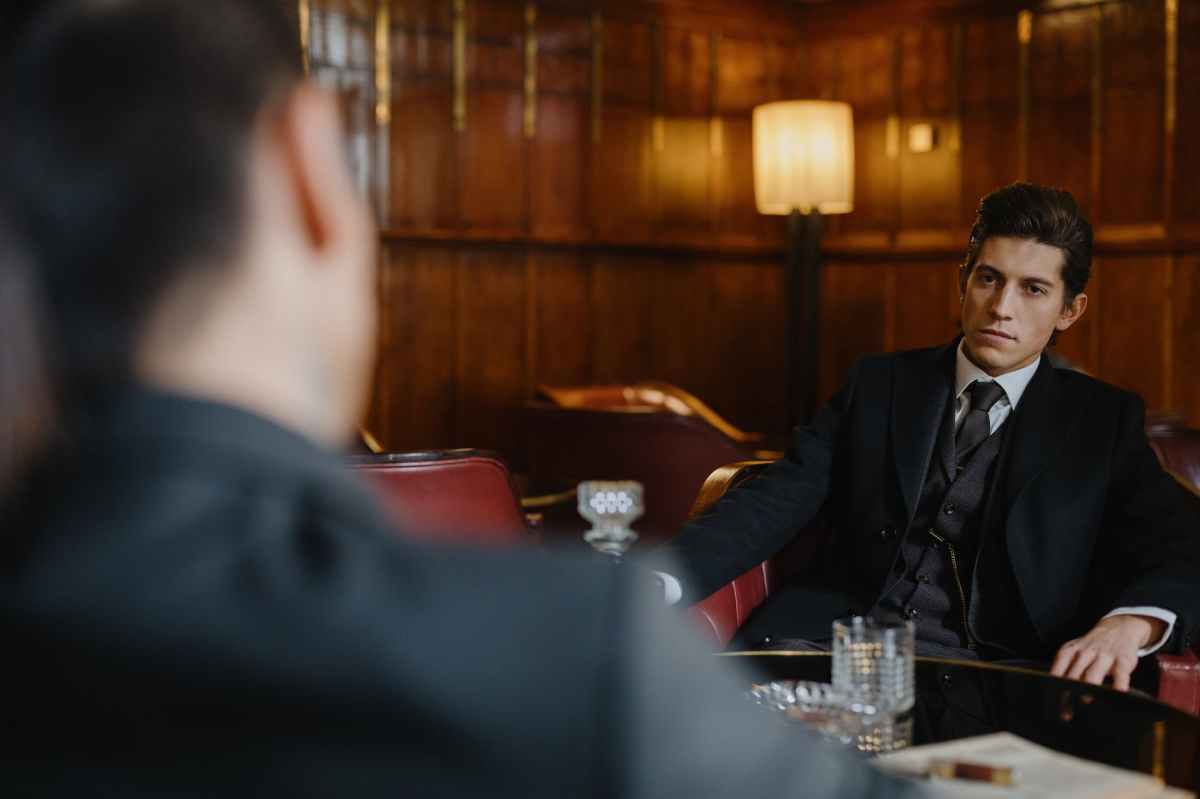
Becoming a `Wise Guy’: life lessons from the Godfather.

Part of Don Vito Corleone’s appeal is the raw exercise of power. He can swiftly execute `justice’ with violence and brutality to achieve his ends. As an audience, it’s like we are willing to `turn a blind eye’ to the `ends justifying the means’ in awe of the Don’s power. It’s like looking into a mirror and catching a reflection of ourselves.

The Godfather trilogy has an extraordinary appeal to movie audiences. The first Godfather movie narrates the later years of the aging family patriarch, Don Vito Corleone. His son, Michael, succeeds him as head of the Corleone crime family. In the final movie, Don Michael Corleone is constantly frustrated in his attempts to move from organised crime to legitimate business. For the aspiring `wise guy’, there are numerous practical life lessons we can learn. In the words of Don Vito Corleone, I will `make you an offer you can’t refuse’ by exploring the practical wisdom of the Godfather.

Fictional characters as `mentors’ and role models.

Whether they are aware of it or not, viewers mimic the attitudes, values, and behaviours of fictitious characters. Many young guys were drawn to gangster-like figures, I observed in my past work in the criminal justice system. One young Australian man expertly mimicked the accent of Tony Montana from the film “Scarface” with an almost faultless imitation Cuban accent. He was the typical Australian “Larrikin.” He had a provocative sense of humour, was very honest and despised authority. His enormous strengths and magnetic personality had a drawback.

Violence/aggression as a `strategy’.

He was a staunch advocate of using aggression and violence to get things done. It is simple to pass judgement on this young man’s practical outlook on life. Although I don’t support violence, the young larrikin didn’t try to hide his opinions. I admired his honesty. There is something appealing about the raw exercise of power that is attractive (and disturbing). The Don was infamous for promptly enforcing “justice” using brutality and bloodshed to further his goals. In awe of the Don’s strength, it’s easy to “turn a blind eye” to his “the ends justify the means’’ approach to life. It’s like seeing a reflection of our darker selves in a mirror.

What Mafia style fantasies reveal about human needs.  

Daydreams and imaginations are excellent sources of knowledge and a terrific way to become more aware of oneself. Imagination can be one way to reclaim our power. There are many situations in life that might make us feel helpless and with no or little control. Bosses that micromanage our work, receiving a ticket from an over-zealous parking inspector or a loud neighbour’s late-night music playing. We may have a sense of powerlessness and disdain in any of these circumstances. As Don, we can “send the boys around to rough up” challenging bosses, the irate parking inspector, and challenging neighbours in our imaginary world.

Self-awareness and re-directing our impulses towards peaceful behaviour.

Self-awareness is crucial while attempting to decipher the meaning of our daydreams. Non-violent communication practitioners think that emotions like anger or irritation point to deeper unmet needs. It is possible to understand the motivations behind these wants and use them for good. By acting, whether it’s having the honest talk with a neighbour or supervisor or strategizing about how to locate a new job, we may make use of the Don’s power and resolve. By being self-aware and bringing our desires to light, we gain the ability to make stronger decisions.

Being conscious of our genuine emotions and wants is the first step to becoming more fully alive. Even when they stem from the “evil side,” those emotions and impulses. We can learn a lot about ourselves by examining our feelings and wants. I’ll discuss the importance of having a “consigliere,” a reliable advisor, or getting smart advice from a wise guy, in my next blog entry.