The Importance of Timing in Life Decisions

Part 2 Maximizing Kairos opportunities: embracing risk.

elderly man posing for the camera
Photo by Alena Darmel on Pexels.com

A no-risk approach is the biggest risk of them all.

Hearing a speaker talk about the `pain of regret’ hit me like lightning! To try anything new is to embrace some level of risk. Regret is a negative feeling of self-condemnation for lost opportunities. It is sorrow for what has been. It can also be the wish to undo past choices. Many people have significant regrets about avoiding trying anything new or risking failure. The discomfort from making mistakes is minor compared to the pain of stagnation and the lament for missed opportunities. Instead, I would look `foolish’ in my first awkward attempts and failures rather than live with the pain of regret. Choose your pain!

Negative feelings: a trigger for self-reflection and a course correction.

Being open to new experiences invites the possibility of negative ones (including failure.)  Negative experiences are part of the journey. The temptation is to retreat or bail out altogether. We will also listen to the negative or siren-like voices that would shipwreck our dreams and goals. On my first trip to India, I was excited about the possibilities. The challenges of navigating different cultures, eating, and the inevitable case of `Delhi Belly.’ Managing to navigate a culture when I was feeling ill was an awful experience. I felt the dreadful sensation of `dry retching’ while hunched over the toilet ball. My stomach continued experiencing vomit-like sensations. There was nothing left inside of me! My India trip helped to catalyse my interests, likes, and dislikes. I had a moment of laser-like clarity. I realized that what I was chasing was in Australia and not overseas.

Risk is the pathway to adventure.

Embracing risk opens possibilities for the adventures that Kairos moments bring. Some of our most interesting moments come from risk-taking. This is learning a new skill. It involves talking to a stranger. It can also mean daring to voice an opinion or applying for a new job. These moments are life-enhancing, transformative, and rewarding. They are the content of exciting stories and the memories we savour and look back upon. The joys of victory, the defeat, and the lessons that have been learned along the way. An older man looked at me and said: Youth aims to collect memories and experiences. We enjoy them in our old age.

Knowing our level of risk.

I have great admiration for people who are high-level risk-takers. The individuals you often read about are the ones who start businesses. They explore hard-to-reach geographical places. They also make bold financial decisions. Our culture and media glorify these risk-takers who have made it. Still, it’s crucial to remember that not all risks lead to success. Real-life stories of failed entrepreneurs who risked everything remind us of the long-term consequences. Some of them now live on the streets. It’s important to carefully assess the level of risk you are willing to accept. Some risks can take much longer to recover from.


The Importance of Timing in Life Decisions

Life presents us with fleeting moments of opportunity, and it is essential to seize them to succeed. Have you ever wished you made wiser decisions and fully embraced these opportunities? Understanding the nuances of time is vital, as not all time is of equal value. Taking decisive action at the right time is the difference between triumph and failure. Shakespeare eloquently expressed this idea in Julius Caesar: “There is a tide in the affairs of men. Taken at the flood, it leads on to fortune.” Time is a finite resource. Many people are left feeling regretful for the missed opportunities. Recognizing the different values of time—beyond our usual measures—opens the door to a new realm of possibilities. Yet, countless individuals hold back from this potential out of fear and hesitation. Don’t let fear stop you from stepping into the adventure that awaits!

The call: opportunity knocks.

Many years ago, I was feeling stifled. I was stagnating at work. I had exhausted the possibilities within my current role. I had grown in my love of research. I was drawn to academia. I struggled to take this side of myself seriously. The possibility of working for a major university was like a mirage. An older friend showed me a job advertisement for the position of Senior Research Assistant at a major University. She looked at me and said: “I can see you in this position”. Life often calls us to step outside of the ordinary. It can be an opportunity or a person that inspires this change.

My uncertainties, justifications, and reasons for inaction quickly dissolved. What once appeared impossible, improbable, and merely a fragment of my imagination transformed into a possible reality. I swiftly compiled my application and resume and then awaited a response from the University. A profound sense of inner assurance enveloped me, leading me to believe this opportunity was destined for me. I recalled the story of the prophet Moses from the book of Exodus. Moses stood at the edge of the Red Sea, with the Israelite people watching anxiously. The armies of Pharaoh advanced rapidly in their chariots bearing down on the Israelites. There was no way of escape. In an extraordinary moment, Moses prayed to Yahweh. The waters of the Red Sea parted. The Israelites crossed the Red Sea safely to the other side. Shortly after the interview, I received a phone call on the same day confirming that the position was mine.

My Red Sea moment: Chronos and Kairos time.

Understanding the difference between Chronos and Kairos time has helped me make better decisions. Time is an important resource. Not all time is of equal value. Chronos or clock time is linear. We measure time by calendars and schedules. Chronos time is helpful when the need is to achieve tasks efficiently. Calculating the time it takes to drive my children to activities helps me to juggle multiple responsibilities. Chronos time helps me to organize myself around the daily routines that build a structure for Kairos opportunities to emerge. Turning up to work on time, completing tasks, and meeting Key Performance Indicators are examples of Chronos time. Adhering to Chronos time provides a salary. It offers benefits like annual (and paternity) leave. It provides an income that contributes to family expenses.

A Kairos moment is the most opportune or `right time’ to act for maximum impact. As the writer of Ecclesiastes observed, ‘There is a time for everything.’ There is a season for every activity under the heavens. Kairos time is a `felt moment.’ Words used to describe Kairos time include `rich’, `suspended in time’ or `seasonal’. Surfers and athletes use words like `peak experience’ or `being in the zone’ to describe Kairos time. Kairos has a seasonal aspect. Like farmers, there are times to sow and to reap to boost a good harvest. Kairos has the sense of being lifted ‘out of the ordinary business of life’ into a different quality of life. Embracing Kairos time improves our quality of life and happiness.

Maximizing Kairos opportunities: adopting a mindset of acceptance.

Kairos moments arise when we let go of the belief that we are at the center of our universe. The notion of being ‘…the master of my fate…and… the captain of my soul’ is poetic. Still, it can also feel overwhelming. Many elements are beyond our control. If you are indeed the master of your fate, you bear the full burden of the outcome. The simplistic viewpoint of `It’s all me…my efforts…my achievements…’ offers no space for other perspectives. What happens in the face of failure? External circumstances can derail or hinder our aspirations and objectives. It’s possible to experience losses in finances, business, or career opportunities due to economic fluctuations, health complications, or other variables. I once met an entrepreneur who ran a thriving computer company. That business failed after the terrorist attacks on the World Trade Center on 09/11/2001. There is no journey without risk or the chance of failure. Far worse than failing to meet our goals is the agony of regret. The path of adventure is found in embracing a mindset of openness and acceptance of whatever happens.

Part 2. Maximising Kairos opportunities: embracing risk.

The quest for intelligent life: aliens, UFOs, and other strange phenomena

Your choice is simple. Join us and live in peace or pursue your present course and face obliteration.

Photo by Marek Piwnicki on Pexels.com

‘Watch the skies,’ the wise old scientist said in a scene from a 1950s science-fiction film. And I did! As a “cradle Catholic,” my old religious beliefs were overshadowed by a new religion: Unidentified Flying Objects. When I couldn’t make sense of institutional religion, I looked to the heavens in search of extra-terrestrial beings. There was a rise of interest in Aliens, Unidentified Flying Objects, Bigfoot, and paranormal phenomena in the mid-1970s. My sister handed me a copy of Erik Von Daniken’s book “Chariots of the Gods.” The author’s belief that alien creatures had visited Earth and contributed to humanity’s progress was both alluring and (pseudo) scientific.

I wanted to believe that more intelligent life forms existed elsewhere in the far-flung reaches of the universe. Perhaps they benefited from evolutionary processes. To those of us, on the lower rungs of the evolutionary ladder, alien beings with sophisticated technologies would appear to possess `supernatural’ powers beyond our limited understanding. We, Earthlings, would one day ride the crest of the evolutionary wave and eventually learn to coexist peacefully among ourselves and our alien friends. Throughout my childhood, the threat of nuclear war between the Soviet Union and the West was always in the background. There was always the hope of alien intervention. Perhaps they can assist us in fixing some of our planet’s most pressing concerns. A recurring, hopeful theme in many science fiction films.

Science fiction films and post-war anxieties in a nuclear age.

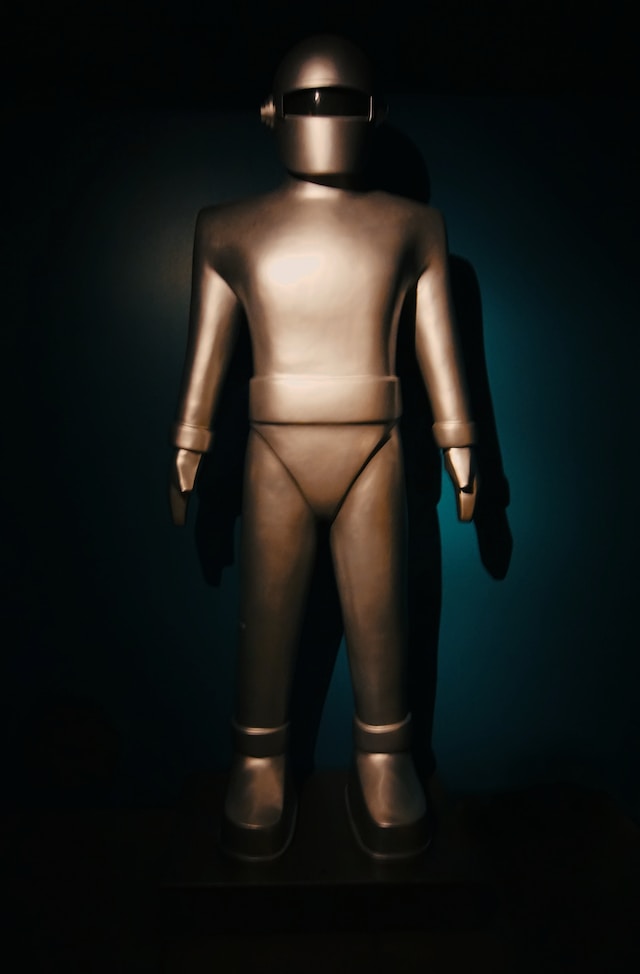
Gort Klaatu Barada Nikto

At the dawn of the nuclear age, one film captured the postwar anxieties of the early 1950s. The plot of ‘The Day the Earth Stood Still’ focused on the arrival of an alien named Klaatu and his robot protector, Gort. Gort descends the flying saucer’s stairway to defend Klaatu after a trigger-happy soldier shoots him in the hand in the opening scene. An intriguing storyline twist is revealed in the closing scene. Klaatu gives a sober warning to the audience of civilians, scientists, clergy, and military. Other races in the cosmos, he claims, are concerned about the human race’s tendency to violence. Klaatu reveals that robots such as Gort patrol the Galaxy, ready to interfere when necessary at the first signs of violence and aggression. To maintain the peace, Klaatu and other aliens have voluntarily become submissive to robots like Gort. In his final words, Klaatu says:

Your choice is simple. Join us and live in peace or pursue your present course and face obliteration.

An unsettling message from one of my favorite sci-fi films. There is an underlying realism. Can humanity ever be trusted to manage our own affairs? Humans are like badly behaved children: we cannot be trusted to govern ourselves and need some `adult supervision’ from a more highly evolved race. During the early eighties, at the height of the peace movement, I remember having a conversation with an older male friend after a Labor party branch meeting. (a Left of centre political party in Australia) The possibility of a nuclear war between the Soviet Union and the United States of America was a topical issue. I clearly remember fretting about the outcome of the 1980 U.S. presidential election. In American terms, I was a liberal and a supporter of the incumbent President, Jimmy Carter. I was disappointed that the Republican candidate, Ronald Reagan won a landslide victory against Carter. As a classic ‘bed wettin liberal’ type, I was almost convinced that Ronald Reagan was trigger happy, like the impulsive soldier that fired at Klaatu. My friend George reassured me that `wiser-heads’ would prevail and the threat of a nuclear Armageddon was over-stated. In 1987, President Reagan negotiated an arms control treaty with the Soviet Leader, Mikhail Gorbachev. What a relief! No more sleepless nights and nightmares of Armageddon. And no need for more `Hollywood style’ alien warnings.

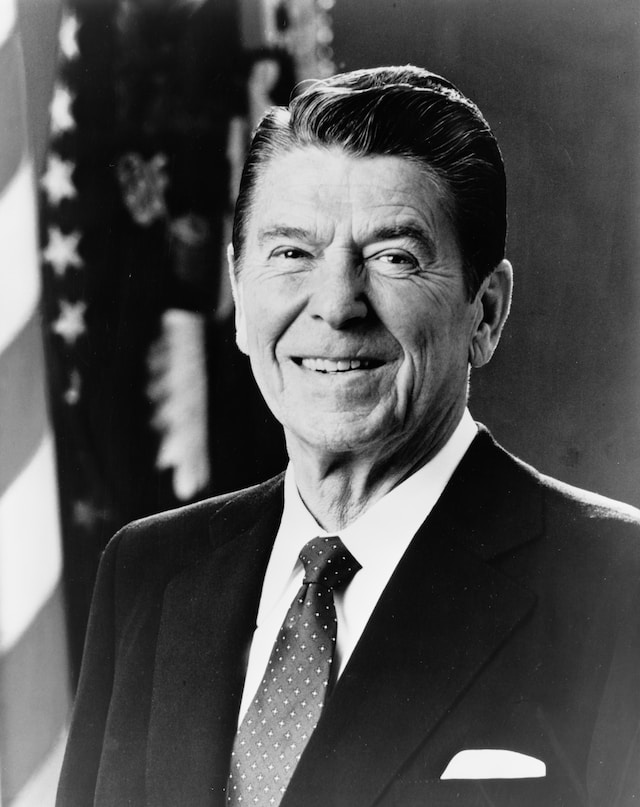
Mr Ronald Reagan, 40th President of the United States of America.

What if the Aliens travelled millions of miles across the galaxy to give us a warning – only to discover we didn’t need their help! Sometimes, we humans get it right! Imagine the Alien ambassador meeting President Reagan at the White House.

Well…gee…it’s quite an honour to finally meet the Ambassador of the National Galactic Council’, President Reagan says in a folksy manner. 

Greetings Earth people. I am Zark. We come in peace. We would like to extend an offer of help. We are concerned about the warlike tendencies of the human race. If you would let us…

President Reagan looks at Ambassador Zark and explains:

`Gee…am…uh… Ambassador Zark…we’re doing fine. I just signed a peace treaty with our longtime enemy…the Soviet Union… If we need your help…we’ll call you.

The belief in aliens or some higher intelligence that can save humanity from a terrible tragedy persists. Even now, the appeal of a ‘Christ’ figure like Klaatu is great. On an instinctual level, perhaps most of us still want for a figure larger than ourselves to intervene and restore peace and harmony to our troubled earth. More like a blunt-spoken John the Baptist, who will push us to abandon our self-centeredness and violence in favour of embracing a larger vision of the possibility of a world at peace. The idea of wiser, more intelligent aliens clashes with another possibility addressed in literature and film. ET is not the only type of alien visitor. Some of them are outright rude, unpleasant and nasty!

Adventure: Looking for a larger story

Photo by Rijan Hamidovic on Pexels.com

Australia’s iconic Sydney Opera House

One of my earliest childhood recollections is hearing some grownups discussing travel during a family barbecue. One of my aunts had visited Sydney and returned with several mementoes, including photo slides, trinkets and a miniature Sydney Opera house pencil sharpener. I was the awestruck recipient of the Sydney Opera House pencil sharpener. Like a precious jewel or ancient artifact, it was gold- coloured and glistened as I held it up to the sunlight.

An elderly man set down his beer and added, “You see your own country first before travelling overseas,” in a thick, nasal Australian accent. Everyone agreed by nodding. His remarks served as the “last rites” on the subject of international travel. There were entire universes in my head just begging to be explored. His universe was limited to going to the pub. Nobody else at the family gathering dared to depart from the safe and acceptable topics of conversation, which included weather, politics, news, sport and family rumours.

In retrospect, it was simple for me to pass judgement. This generation lived through the Great Depression. Not long after, the Second World War broke out. They had to deal with shortages and lost friends and relatives to war. These were sensible individuals who had cultivated a sense of thrift and valued financial stability. I was uncomfortable with their lack of curiosity and desire to consider alternate ways of understanding the world. I did appreciate hearing tales of the war or wartime escapades; some were humorous, given with a very distinctively Australian, irreverent sense of humour; other tales, however, were tragic, sad or difficult to comprehend. There is something very human within us that yearns to discover or live for a bigger narrative, to be bold and adventurous, or to be willing to give our very self for a greater good.

The beginning of a larger story: the role of organised religion.

Photo by Paolo on Pexels.com

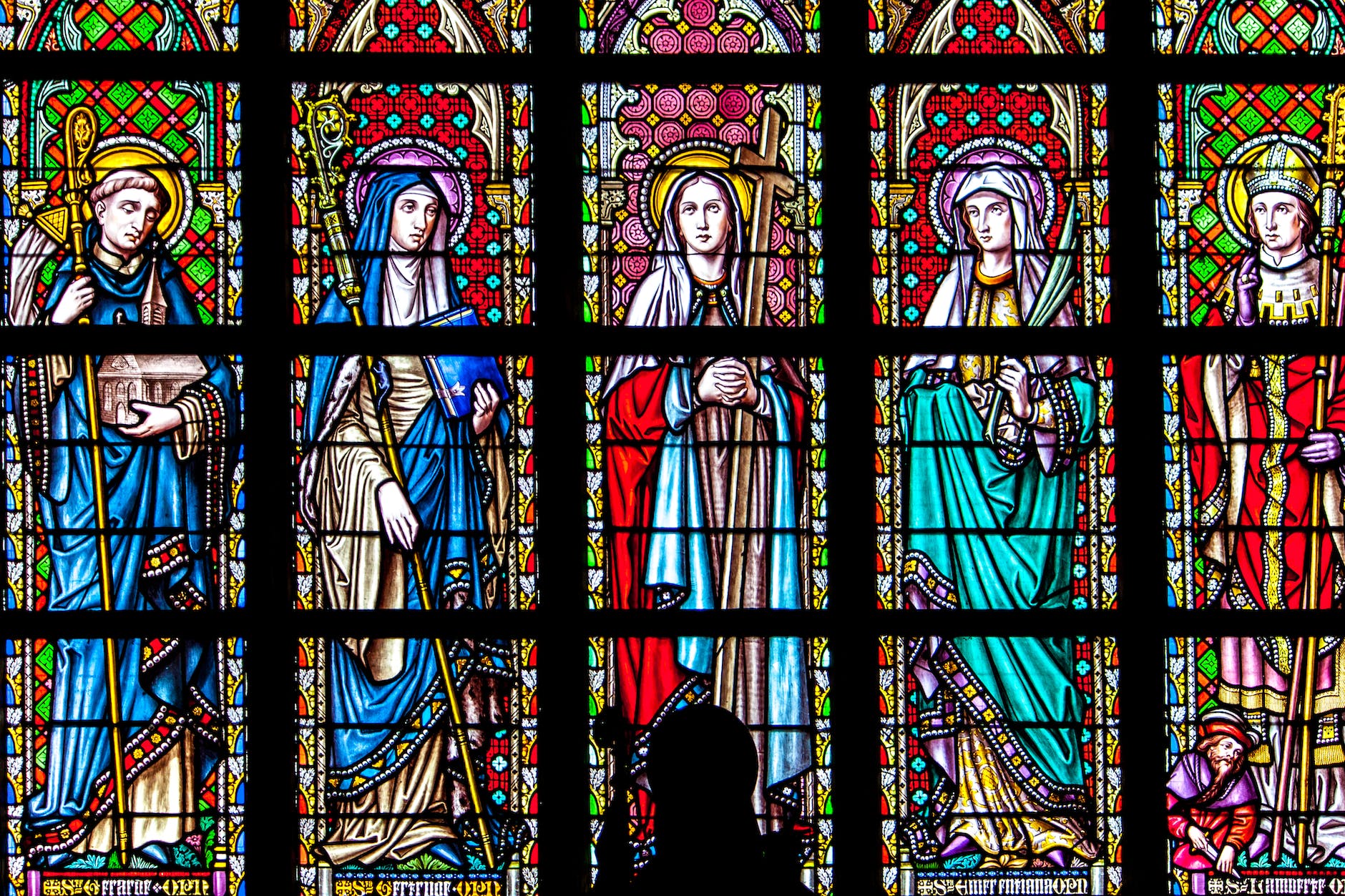
Alternate narratives can be found in the most unexpected locations. I was raised in a Catholic household. Despite the church’s greatest efforts to make faith in God seem uninteresting, there were always some subversive undercurrents that thrived, inspired, and provoked participants within the institution.

The elderly nun who taught us religion one day shared a fascinating tale about Fr. Maximilian Kolbe, a Franciscan priest known as the “saint of Auschwitz death camp,” with us. Franciscan friar Maximilian Kolbe resided in a monastery in Poland. Fr. Kolbe organised a temporary hospital and assisted to offer shelter for 2000 Jewish refugees when the German army invaded Poland in 1939. In the end, the Gestapo detained him for concealing refugees and put him in the Auschwitz concentration camp.

The Auschwitz Deputy Commander issued an order in 1941 to execute ten prisoners in retribution for an attempted escape. One of the men begged for forgiveness since he was a father. The man’s suffering touched Fr Maximilian Kolbe, who offered to step in. The Deputy Commander granted his request, and Fr Maximilian and a few other survivors were ultimately put to death. Some Saints, such as Francis of Assisi and Teresa of Avila, bucked convention and discovered independence inside the established church. They were “Fools for Christ,” living selflessly and bravely for others. These tales had a lasting impact on my life or are still resonating now.

There circumstances where men and women freely and voluntarily sacrifice their life for others in the world today. It takes self-identity to sacrifice out of freedom rather than following some externally imposed view or belief for the sacrifice to have any real meaning. I could not really grasp how to make their example ‘my own’ unless I applied to the priesthood or a religious order. The difference between my everyday existence and the religious ideal was enormous. How was I ever going to close that gap? Feeling disappointed, I gradually turned to another source of “ancient wisdom” – the occult.