
The quest for intelligent life: aliens, UFOs, and other strange phenomena

Your choice is simple. Join us and live in peace or pursue your present course and face obliteration.

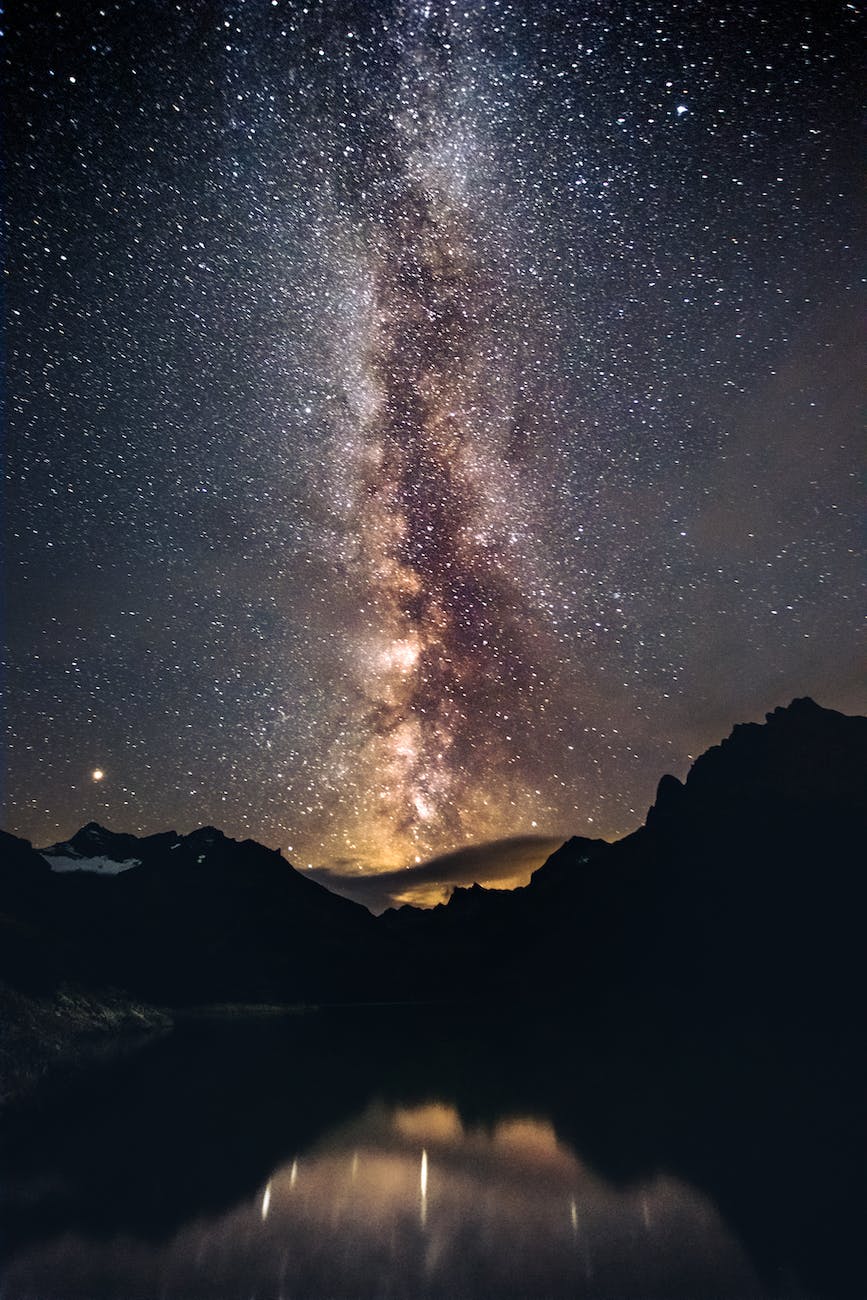
Photo by Marek Piwnicki on Pexels.com

‘Watch the skies,’ the wise old scientist said in a scene from a 1950s science-fiction film. And I did! As a “cradle Catholic,” my old religious beliefs were overshadowed by a new religion: Unidentified Flying Objects. When I couldn’t make sense of institutional religion, I looked to the heavens in search of extra-terrestrial beings. There was a rise of interest in Aliens, Unidentified Flying Objects, Bigfoot, and paranormal phenomena in the mid-1970s. My sister handed me a copy of Erik Von Daniken’s book “Chariots of the Gods.” The author’s belief that alien creatures had visited Earth and contributed to humanity’s progress was both alluring and (pseudo) scientific.

I wanted to believe that more intelligent life forms existed elsewhere in the far-flung reaches of the universe. Perhaps they benefited from evolutionary processes. To those of us, on the lower rungs of the evolutionary ladder, alien beings with sophisticated technologies would appear to possess `supernatural’ powers beyond our limited understanding. We, Earthlings, would one day ride the crest of the evolutionary wave and eventually learn to coexist peacefully among ourselves and our alien friends. Throughout my childhood, the threat of nuclear war between the Soviet Union and the West was always in the background. There was always the hope of alien intervention. Perhaps they can assist us in fixing some of our planet’s most pressing concerns. A recurring, hopeful theme in many science fiction films.

Science fiction films and post-war anxieties in a nuclear age.

Gort Klaatu Barada Nikto

At the dawn of the nuclear age, one film captured the postwar anxieties of the early 1950s. The plot of ‘The Day the Earth Stood Still’ focused on the arrival of an alien named Klaatu and his robot protector, Gort. Gort descends the flying saucer’s stairway to defend Klaatu after a trigger-happy soldier shoots him in the hand in the opening scene. An intriguing storyline twist is revealed in the closing scene. Klaatu gives a sober warning to the audience of civilians, scientists, clergy, and military. Other races in the cosmos, he claims, are concerned about the human race’s tendency to violence. Klaatu reveals that robots such as Gort patrol the Galaxy, ready to interfere when necessary at the first signs of violence and aggression. To maintain the peace, Klaatu and other aliens have voluntarily become submissive to robots like Gort. In his final words, Klaatu says:

Your choice is simple. Join us and live in peace or pursue your present course and face obliteration.

An unsettling message from one of my favorite sci-fi films. There is an underlying realism. Can humanity ever be trusted to manage our own affairs? Humans are like badly behaved children: we cannot be trusted to govern ourselves and need some `adult supervision’ from a more highly evolved race. During the early eighties, at the height of the peace movement, I remember having a conversation with an older male friend after a Labor party branch meeting. (a Left of centre political party in Australia) The possibility of a nuclear war between the Soviet Union and the United States of America was a topical issue. I clearly remember fretting about the outcome of the 1980 U.S. presidential election. In American terms, I was a liberal and a supporter of the incumbent President, Jimmy Carter. I was disappointed that the Republican candidate, Ronald Reagan won a landslide victory against Carter. As a classic ‘bed wettin liberal’ type, I was almost convinced that Ronald Reagan was trigger happy, like the impulsive soldier that fired at Klaatu. My friend George reassured me that `wiser-heads’ would prevail and the threat of a nuclear Armageddon was over-stated. In 1987, President Reagan negotiated an arms control treaty with the Soviet Leader, Mikhail Gorbachev. What a relief! No more sleepless nights and nightmares of Armageddon. And no need for more `Hollywood style’ alien warnings.

Mr Ronald Reagan, 40th President of the United States of America.

What if the Aliens travelled millions of miles across the galaxy to give us a warning – only to discover we didn’t need their help! Sometimes, we humans get it right! Imagine the Alien ambassador meeting President Reagan at the White House.

Well…gee…it’s quite an honour to finally meet the Ambassador of the National Galactic Council’, President Reagan says in a folksy manner. 

Greetings Earth people. I am Zark. We come in peace. We would like to extend an offer of help. We are concerned about the warlike tendencies of the human race. If you would let us…

President Reagan looks at Ambassador Zark and explains:

`Gee…am…uh… Ambassador Zark…we’re doing fine. I just signed a peace treaty with our longtime enemy…the Soviet Union… If we need your help…we’ll call you.

The belief in aliens or some higher intelligence that can save humanity from a terrible tragedy persists. Even now, the appeal of a ‘Christ’ figure like Klaatu is great. On an instinctual level, perhaps most of us still want for a figure larger than ourselves to intervene and restore peace and harmony to our troubled earth. More like a blunt-spoken John the Baptist, who will push us to abandon our self-centeredness and violence in favour of embracing a larger vision of the possibility of a world at peace. The idea of wiser, more intelligent aliens clashes with another possibility addressed in literature and film. ET is not the only type of alien visitor. Some of them are outright rude, unpleasant and nasty!


Step into your Adventure

We need a new kind of explorer, a new kind of pathfinder, human beings who, now that the physical world is spread out before us like an open book with the latest geographical mystery solved and the highest mountain climbed, are ready to turn and explore in a new dimension.

Laurens Van Der Post.

Photo by Alex Azabache on Pexels.com

Travel and the external quest for Adventure

The word `adventure’ conjures up images of intrepid explorers in far-off lands. Traditionally, adventure was the privilege of a select few. Only the very wealthy could fund overseas adventures. There were also incredible risks involved. While getting `Delhi-belly’ during a backpacking trip in North India was a nuisance, some traditional adventures cost explorers their health and their lives. Cheap airfares, the internet and social media have opened up the world in ways that people could not have previously imagined.

In an increasingly interconnected world, exciting new places are being discovered at a furious pace. It’s like time and space have become compressed. Recently, I participated in a webinar with people from around the world including a Hindi- speaking woman from Colorado and an Egyptian man who lives in Cairo. The exhilarating rate of discovery comes with the loss of the old definition of adventure. There are fewer, untouched areas of the planet that have been left unexplored and untouched by tourists.

The age of mass travel opens up the world.

As airline travel began to emerge in the fifties and sixties, the possibility of mass travel around the world became a reality. In the 1960’s, Sean Connery as fictional spy, James Bond, catalysed the imagination of the public as he embarked on exhilarating overseas adventures. James Bond movies have long been able to draw on audiences’ desire for escapism, exotic locations, and danger. Airline travel was still very expensive and a novelty for most people. If airline travel was too expensive, movie-goers could relax and enter the imaginary world of agent 007 as he jetted around the world on assignment.

James Bond (and other fictional heroes) encouraged us to discover many of these locations for ourselves. On my first backpacking trip to Udaipur, (South India) in 1999, I stayed in a hostel. I was exploring the possibility of doing community development in North India. From the balcony, I could see the famed Lake Taj Palace.  The Taj Palace was one of the locations for filming Octopussy. Every evening, the hotel owners placed a well-worn VHS copy of the movie, Octopussy in the video machine to the delight of tourists.

The threshold for adventure increases.

In an age of mass travel, audiences are more sophisticated and have a higher threshold for adventure. Our thirst and craving for new and original or exotic experiences is difficult to satisfy. Bond movies adapted to satisfy the growing expectations of moviegoers for exotic locations. The most recent Bond movie, `No Time to Die’, was set in multiple countries around the world. Finding exotic locations is a real challenge. There are fewer unknown areas, groups, or localities that have not been exposed to the influences of Western culture or tourists.

During the 1980s, I went to see the movie `The Last Emperor’, with a friend. The movie is based on the story of the last monarch of the Qing dynasty in China during the Japanese occupation in World War 2. I looked around to see my friend, Emily sobbing quietly. After the movie was over, I asked Emily why she was crying. A normally chatty and vivacious person, Emily paused to gather her thoughts. She looked at me and said: `I was crying over the end of an era’.  Emily explained that she felt the loss of old-age traditions and exotic locations. A musician once told me: `If you want to get a taste or an experience of traditional music cultures or untouched cultures…you might have better luck in the diaspora s people cling or value their traditional culture more when in a foreign land or new country.

The end of adventure or the beginning of something new?

The absence of undiscovered or novel locations is not the only challenge to traditional notions of adventure. There is also the risk of over-exposure and familiarity. Our innate restlessness, yearning for adventure, and thirst for new experiences can never be fulfilled. Traveling will never totally satisfy a deep desire or longing in our hearts. As a wise man once said, we have “eternity in our hearts,” a restlessness and desire within to be a part of a larger cause or a story bigger than ourselves. The slow demise of traditional notions of adventure presents an opportunity. A challenge to reimagine the concept of adventure.

Life is an adventure:  finding adventure in everyday life through self-discovery.

Photo by Andrea Piacquadio on Pexels.com

A new breed of explorer has emerged: one who looks within and is interested in self-discovery and learning. Regardless of where they live, the true explorer seeks out new experiences and challenges. There are internal adventures that ask us to go beyond our known or fixed concepts, into dark and unpleasant areas, and confront ourselves before we can break through. On his/her journey, the explorer encounters all of his anxieties, causes that have become strongholds or mental prisons. He must overcome his fear of appearing ‘foolish’ before he can become competent and have a genuine chance of changing jobs or improving his relationships. You can make a simple day adventurous by stepping out of your ordinary routine, trying different things and experiencing life in new ways.

In my next blog post, I will elaborate on why re-imaging Adventure will become more important in the next decade.